









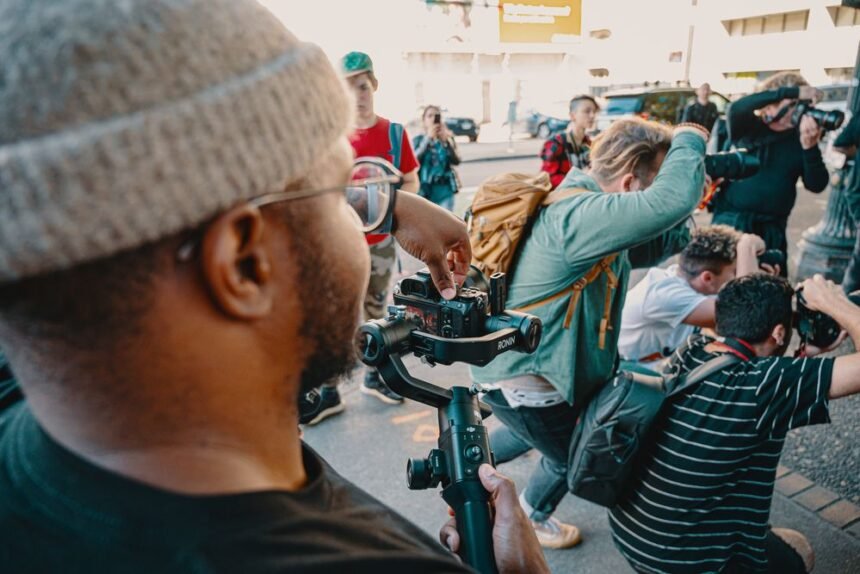
There was a time when a single well-timed photo of a celebrity picking up groceries could earn a photographer $15,000. Today, that same type of image might pay $5 to $10 under a subscription licensing deal. The paparazzi industry has not disappeared, but the economics behind it have shifted so dramatically that the original business model is hard to sustain.
This article looks at what paparazzi work actually involves as a commercial operation, how profitable it once was, what drove the decline, how some photographers have adapted, and whether the profession has a realistic future.
What Paparazzi Work Looks Like as a Business
Paparazzi are independent photographers who capture candid images of celebrities in public and then license those photos to tabloids, gossip magazines, and celebrity news websites. They are not staff employees. Their income depends entirely on what sells and at what price.
The typical workflow involves monitoring known celebrity hotspots, acting on tips, shooting images, and then submitting those photos to agencies. The agencies negotiate licensing deals with media outlets and take a cut of whatever the image earns. According to BBC Worklife, photographers receive only a share of what agencies collect, which means individual payouts depend on both the sale price and the agency’s terms.
Priceonomics describes the business in three stages: capturing the image, placing it through an agency, and licensing it to a buyer. Each stage involves a middleman, and each one reduces the photographer’s final take.
How Profitable Paparazzi Work Used to Be
During the 1990s and early 2000s, the industry operated in genuinely different financial conditions. Print magazines carried significant advertising revenue and were willing to pay premium prices for exclusive celebrity images. A candid “just like us” shot of a major celebrity at a grocery store or coffee shop could earn between $5,000 and $15,000 from a single publication, according to BBC Worklife.
More dramatic images commanded far higher prices. Photos of celebrity couples, newborn babies, or high-profile public moments were treated as premium editorial content. Some photographers could reliably earn six-figure annual incomes during this period.
ABC News has referenced the historically high value placed on images tied to the most visible celebrities of that era. Marketplace noted that strong magazine advertising budgets were a direct driver of what outlets could afford to spend on photography. When those budgets contracted, so did the rates.
Why the Economics Collapsed
The decline was not caused by one factor. Several forces converged over roughly a decade to undermine the business model.
Image Prices Fell Dramatically
The most concrete change is the price paid per image. BBC Worklife documents how subscription and bulk licensing models now pay photographers as little as $5 to $10 per image. That is roughly one-thousandth of what a comparable shot earned at the industry’s peak. Marketplace reported cases of individual photographers experiencing income drops of approximately 40 percent during periods of industry contraction.
Supply of Celebrity Images Exploded
Before smartphones, paparazzi were effectively exclusive suppliers of a scarce product: candid images of famous people going about their daily lives. That scarcity no longer exists. Fans, bystanders, and celebrities themselves now generate a continuous stream of images at no cost.
Priceonomics and various industry observers note that many agencies now accept photo submissions from anyone who captures a recognizable face. A person who happens to be in the same café as a well-known actor can upload a photo through an agency’s online form and compete directly with professional photographers. This increases supply while driving prices lower.
Celebrities Started Managing Their Own Image
Social media gave celebrities direct access to their audiences. Through Instagram and TikTok, a celebrity can publish their own carefully timed images, control the narrative around their appearance, and release content that feels candid without involving any outside photographer. This reduces the market for unsanctioned shots because the audience is already being served.
Some celebrities have gone further by arranging what might be called “managed candids,” where a photographer is tipped off or quietly hired to capture shots that appear spontaneous. This arrangement benefits the celebrity’s public profile while bypassing the traditional paparazzi market entirely.
Print Magazine Revenue Declined
The buyers who once paid high rates for paparazzi images were print magazines with healthy advertising income. As digital media replaced print circulation, those budgets shrank. Online outlets that cover celebrity news pay less per photo and often rely on bulk subscription arrangements rather than individual licensing deals. This structural shift in the media industry hit paparazzi earnings directly.
Ethical and Legal Pressure on the Profession
Beyond economics, the industry faces ongoing reputational and regulatory scrutiny. Public attitudes toward aggressive celebrity photography have grown more critical over time. High-profile harassment cases and tragedies linked to paparazzi behavior contributed to a broader cultural shift in how the profession is perceived.
Awareness around privacy rights, anti-harassment norms, and the wellbeing of public figures has made the more aggressive tactics associated with paparazzi work socially unacceptable to a larger segment of the public. Wikipedia’s overview of the industry notes that the profession has become not only less profitable but also more legally and reputationally risky.
Paparazzi photography in public spaces remains largely lawful in most jurisdictions. However, specific legal restrictions vary significantly by location, which adds operational uncertainty for photographers working across different cities or countries. Some celebrities and advocacy groups have pushed for stronger protections, though no single legislative change has fundamentally altered the profession’s legal standing.
How Some Photographers Have Adapted
The photographers who continue working in this space have generally shifted their approach. Rather than pursuing any recognizable face on any given day, professionals now focus on high-value targets and specific situations where an exclusive image is still possible—a surprise celebrity couple, an unannounced pregnancy, or a major casting reveal photographed on a film set.
Vogue has reported on the ongoing tension between paparazzi and film productions. On-location shoots for major film and television projects are frequently targeted, with photographers capturing costumes, plot details, or unexpected cast appearances. Producers have responded by modifying shoot locations and restricting access, but paparazzi activity around productions remains active.
Other photographers have moved toward hybrid models: supplementing occasional paparazzi work with event photography, influencer shoots, or direct client commissions where income is more predictable. This reflects a broader pattern in the gig economy, where a single income source is rarely sufficient and professionals build a portfolio of work types.
For more analysis of shifting business models across media and entertainment industries, LiveBizMag covers these transitions in practical terms.
Is Paparazzi Going Out of Business?
The honest answer is that the traditional paparazzi business model is shrinking and transforming, not disappearing entirely. The profession still exists. High-value exclusive images still get sold. But the conditions that once allowed a working photographer to build a reliable six-figure income from celebrity candids have largely disappeared.
Fewer people can make full-time incomes doing this work. Competition from bystanders with smartphones, lower payout rates, reduced print magazine budgets, and celebrities’ growing control over their own image have all contributed to a smaller, more precarious market.
What remains is a narrower, higher-stakes version of the original business: fewer active professionals, focused on a smaller number of genuinely newsworthy moments, competing in a market where the occasional exclusive still commands real value but the average shot earns almost nothing.
As long as there is public demand for candid celebrity content—and that demand shows no sign of disappearing—some version of the paparazzi profession will likely continue. But the days when it represented a broadly accessible and reliably profitable career path are over. The industry has not closed, but the business model that once defined it has fundamentally changed.
Read Also: